


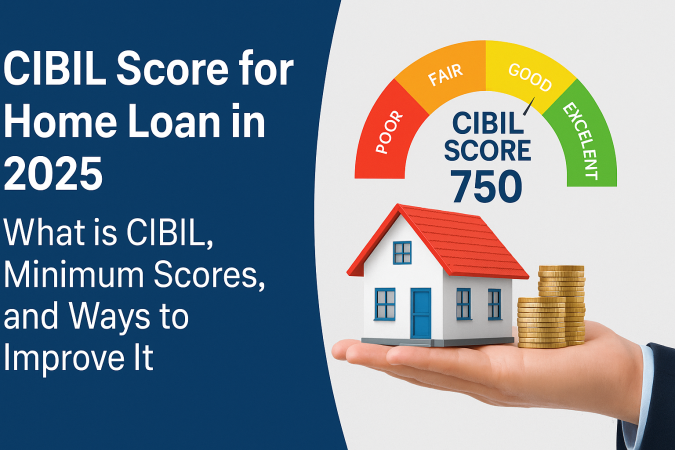
Securing a home loan is a significant step toward homeownership, but your CIBIL score for home loan plays a major role in determining your eligibility, interest rates, and overall loan terms. A CIBIL score is a three-digit number ranging from 300 to 900 that reflects your credit behaviour and repayment history. In 2026, lenders across India, including banks and housing finance companies, review your credit profile to assess repayment reliability and overall borrowing risk. This guide explains what a CIBIL score is, the minimum CIBIL score generally preferred for home loans, practical ways to improve your score, and the options available to borrowers with lower credit scores. It also explores common reasons why home loan applications may face delays or rejection despite a seemingly strong score, along with how to check and monitor your CIBIL report before applying.
Get your CIBIL Credit Report For Free!
By clicking on "Check Your CIBIL Score", you agree to our Terms And Conditions, Privacy policy, and Terms of Use.
You will receive an OTP on your registered mobile number
Just two additional information required
Get best bank offers for your Home Loan
Processing your request...
Please wait while we fetch your CIBIL report
Table of Contents
- What is a CIBIL Score and Why It Matters for Home Loans
- Minimum CIBIL Score for Home Loan by Major Banks
- Practical Ways to Improve Your CIBIL Score
- Home Loan Options for Low CIBIL Score
- Why Your Loan Gets Rejected Even with a Good CIBIL Score
- How to Check Your CIBIL Score for Home Loan
- Common Queries About CIBIL Score and Home Loans
What is a CIBIL Score and Why It Matters for Home Loans
A CIBIL score, provided by TransUnion CIBIL, India’s leading credit bureau, summarizes your credit history, including loan repayments, credit card usage. It’s calculated based on factors like:
- Payment History : Timely EMI and credit card payments boost your score.
- Credit Utilization : Keeping credit utilisation relatively low is generally considered a sign of responsible credit management.
- Credit Mix : A balance of secured (e.g., home loans) and unsecured (e.g., credit cards) loans is favorable.
- Length of Credit History: Longer credit history improves scores.
- New Credit Inquiries: Multiple loan applications in a short period can lower your score.
For home loans, a higher CIBIL score (closer to 900) signals lower risk to lenders, leading to faster approvals, lower interest rates, and higher loan amounts. A CIBIL score for housing loan below 650 often results in stricter terms or rejection. In 2025, with rising property costs, understanding your home loan eligibility CIBIL score is crucial for planning your finances.
Minimum CIBIL Score for Home Loan by Major Banks
The minimum CIBIL score for home loan varies by lender, but most banks prefer scores above 700 for favorable terms. Below are bank-specific requirements for 2025, based on recent data:
| Bank | Minimum CIBIL Score | Interest Rate Range (% p.a.) | Notes |
|---|---|---|---|
| HDFC Bank | 700 | 8.50-9.55 | Scores ≥780 qualify for lowest rates; HDFC home loan CIBIL score required is strictly enforced. |
| SBI | 650 | 8.40-10.15 | Minimum CIBIL score for SBI home loan is flexible for rural applicants; risk-based pricing applies. |
| ICICI Bank | 700 | 9.00-9.80 | Minimum CIBIL score for ICICI home loan varies for salaried vs. self-employed. |
| Axis Bank | 650 | 8.70-9.50 | Minimum CIBIL score for home loan in Axis Bank allows smaller loans for scores 650–700. |
| Bank of Baroda | 701 | 8.40-10.60 | Bank of Baroda CIBIL score for home loan emphasizes timely EMI history. |
| PNB Housing Finance | 650 | 8.00-9.75 | PNB home loan CIBIL score offers competitive rates for scores ≥750. |
| LIC Housing Finance | 650 | 8.50-10.00 | Minimum CIBIL score for LIC home loan supports flexible terms for scores 650–700. |
Note: Scores between 650-749 may secure a home loan for low CIBIL score, but expect higher interest rates or lower loan amounts. Scores below 650 often require NBFCs or alternative options.
Practical Ways to Improve Your CIBIL Score
Improving your CIBIL score for home loan eligibility takes 6-12 months but can significantly enhance your chances of securing a home loan based on CIBIL score. Here are actionable steps:
- Pay EMIs and Bills on Time: Late payments reduce your score. Set auto-debit or reminders to avoid delays.
- Lower Credit Utilization: Keep credit card usage below 30% of the limit. Pay off balances in full each month.
- Clear Outstanding Debts: Settle overdue loans or credit card dues to remove negative remarks from your CIBIL report.
- Avoid Multiple Loan Applications: Each application triggers a hard inquiry, lowering your score. Space out applications by 3-6 months.
- Check CIBIL Report for Errors: Dispute inaccuracies (e.g., closed accounts shown as open) via the CIBIL website.
- Use Secured Credit: A secured credit card can rebuild your score if used responsibly.
- Maintain a Healthy Credit Mix: Balance secured (e.g., home loans) and unsecured (e.g., personal loans) credit.
Regularly monitoring your CIBIL score check for home loan helps track progress. Improvements reflect in your report within 2–3 months of consistent financial discipline.
Home Loan Options for Low CIBIL Score
Securing a home loan for low CIBIL score (e.g., CIBIL score 550 can I get home loan or my CIBIL score is 600 can I get home loan) is challenging but possible. Options include:
- NBFCs: Non-Banking Financial Companies like IIFL Finance or Bajaj Housing Finance offer NBFC home loan for low CIBIL score, often at higher interest rates (10-14% p.a.).
- Co-Applicant with Good CIBIL: Adding a co-applicant with a score above 750 can improve approval chances.
- Higher Down Payment: Paying 30-40% upfront reduces lender risk for a home loan for CIBIL score 600.
- Loan Against Property: A loan against property with bad CIBIL uses property as collateral, with lenders like PNB Housing Finance accepting scores as low as 600.
- Guarantor: In some cases, adding a guarantor or co-applicant with a strong credit profile may strengthen a home loan application, particularly when the primary applicant has a weak credit history or limited credit profile.
- Smaller Loan Amounts: Lenders may approve smaller loans for home loan low CIBIL score applicants, capping at 60-70% of property value.
Without CIBIL score home loan options are rare, as most lenders require some credit history. NBFCs or cooperative banks may consider applications with strong income proof or collateral.
Why Your Loan Gets Rejected Even with a Good CIBIL Score
Even a good CIBIL score for home loan (above 750) doesn’t guarantee approval. Common reasons for rejection include:
- High Debt-to-Income Ratio: If your existing EMIs exceed 50% of your income, lenders may doubt repayment capacity.
- Insufficient Income: Low or unstable income, especially for self-employed applicants, can lead to rejection.
- Property Issues: Unapproved properties or legal disputes over the property can halt loan processing.
- Multiple Hard Inquiries: Recent applications for other loans or credit cards signal credit hunger.
- Incomplete Documentation: Missing or inconsistent documents (e.g., mismatched PAN details) cause delays or rejections.
- Job Instability: Frequent job changes or short employment tenure raise red flags.
Addressing these issues, such as consolidating debts or stabilizing income, can improve your home loan eligibility based on CIBIL score.
How to Check Your CIBIL Score for Home Loan
Before applying, perform a home loan CIBIL score check to assess your eligibility. Follow these steps:
- Visit www.transunioncibil.com.
- Click “Get Your CIBIL Score” and choose a subscription plan (free once a year).
- Log in or create an account with your PAN, email, and mobile number.
- Verify identity with OTP and answer credit history questions.
- View your score and report on the dashboard.
Alternatively, banks like SBI or apps like Navi offer CIBIL score check for home loan services. Regular checks help identify errors early, ensuring your CIBIL report for home loan is accurate.
Frequently Asked Questions
What is the minimum CIBIL score for a home loan in HDFC Bank?
HDFC generally considers applicants with a credit score of 700 or above for home loan applications. Higher credit scores may improve eligibility and can help borrowers access more competitive interest rates, subject to the lender's prevailing policies and the applicant's overall profile.
Can I get a home loan with a CIBIL score of 550?
Some lenders may consider applications from borrowers with lower credit scores, particularly when supported by factors such as stable income, a co-applicant, a higher down payment, or a strong property profile. However, approval may involve stricter eligibility checks, additional documentation requirements, or less favourable loan terms.
Is a home loan possible without a CIBIL check?
Most banks and housing finance companies review an applicant's credit history as part of the home loan approval process. While certain lenders may place greater emphasis on income, repayment capacity, or property value, credit assessment remains an important component of underwriting.
What is considered a good CIBIL score for a home loan?
A credit score of 750 or above is generally considered strong for home loan applications. Borrowers with higher scores may benefit from improved approval prospects, better interest rate offers, and greater lender confidence.
My CIBIL score is 650. Can I still get a home loan?
Yes, some lenders may approve home loan applications with a score of around 650, depending on factors such as income stability, existing liabilities, employment profile, property details, and overall repayment capacity. Additional verification or stricter lending terms may apply.
How does a lower credit score affect home loan interest rates?
A lower credit score may increase the perceived lending risk for financial institutions. As a result, borrowers may receive higher interest rates, stricter loan conditions, lower eligible loan amounts, or additional documentation requirements compared to applicants with stronger credit profiles.
Can I get a home loan with a low credit score?
Yes, some lenders may consider applications from borrowers with lower credit scores, depending on factors such as income stability, existing liabilities, property profile, and overall repayment capacity. However, approval may involve stricter eligibility checks, higher interest rates, or additional documentation requirements.
Understanding how lenders evaluate credit profiles can help you prepare more effectively before applying for a home loan. Regularly reviewing your credit report, maintaining timely repayments, and managing existing credit responsibly can strengthen your overall borrowing profile and improve your chances of a smoother home loan approval process.